Chartist Mural: Newport's Lost Mosaic Tribute to the 1839 Rising
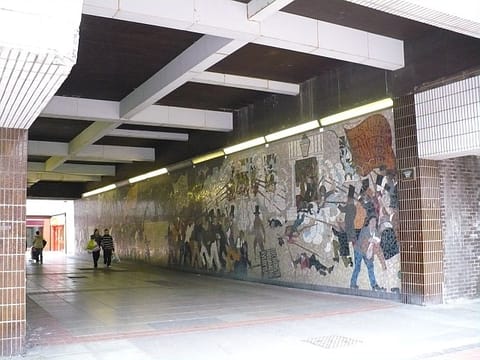
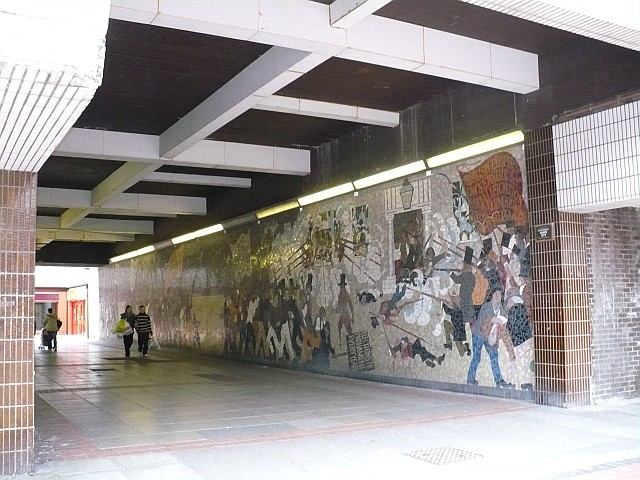
Beneath the bustle of Newport's city centre, close to John Frost Square, commuters and shoppers once passed through an underpass where the walls told one of Wales's most dramatic stories. The Chartist Mural, a large mosaic created in the late 1970s, turned an everyday walkway into a public tribute to the men and women who marched on the town in 1839. Although it is no longer there, it remains one of the best-remembered pieces of public art the city has known.
The Story Behind the Mural
The mural commemorated the Newport Rising of 4 November 1839, when thousands of Chartists, many of them from the valleys, converged on the town. They were demanding political reform, including the vote for working men. The Chartist movement as a whole campaigned for a set of democratic changes set out in the People's Charter, several of which are taken for granted today.
The march ended in confrontation outside the Westgate Hotel, where soldiers fired on the crowd and more than twenty people lost their lives. John Frost, Zephaniah Williams and William Jones were later convicted of high treason and sentenced to death, though the sentences were commuted to transportation. Few moments in Welsh history have been so closely tied to Newport's identity.
An Artwork for Everyday Life
The artist and the medium
The work was designed by the artist Kenneth Budd and completed in 1978 as part of the wider redevelopment of the town centre at that time. Rather than hang a painting in a gallery, the project took art to the place where people actually walked. The mural was built up from a great many small pieces of glass and ceramic, set together to form a continuous scene along the walls of the subway.
What it showed
The imagery drew on the Chartist march and the struggle surrounding it, with figures moving together in a way that gave the mosaic a sense of momentum. Seen at walking pace, it worked rather like a long frieze, so that visitors passing through were drawn along the story from one end to the other.
- Subject: the Newport Rising and the Chartist cause
- Artist: Kenneth Budd
- Completed: 1978
- Medium: mosaic of glass and ceramic pieces
- Setting: a pedestrian underpass beside John Frost Square
Why It Mattered to Newport
The mural's location was fitting. John Frost Square is named after the Chartist leader, and the nearby Chartist Tower, a later landmark, also keeps the story visible in the city. The mosaic brought the same history down to street level, where schoolchildren, shoppers and visitors encountered it without needing to seek it out.
For many locals it became a familiar part of daily life. It was not always in perfect condition, as underpasses are rarely kind to artworks, but it carried real emotional weight. It helped keep a story of ordinary people demanding a voice at the front of the city's civic memory.
Redevelopment and Removal
As Newport's city centre was reshaped in the early 2010s, the area around the underpass was earmarked for change, including the creation of a new retail and leisure district. The mural stood in the way of the plans. Campaigners, historians and residents argued that it deserved protection, and petitions and public debate followed. Supporters felt that a work of such local significance should be preserved or carefully relocated.
The mural was not given protected status, and it was removed in 2013 as the redevelopment went ahead. The decision was deeply divisive. Some saw it as a practical step towards regeneration, while others felt the city had lost an irreplaceable part of its heritage. The episode is still referred to in discussions of how Newport balances renewal with remembrance.
The Legacy Today
Although the original mosaic has gone, the story it told has not been forgotten. The Chartist heritage is commemorated in other parts of Newport, through monuments, events and educational work, and the debate over the mural encouraged many people to think harder about how public art is valued. Photographs and personal memories keep the work alive, and it is often mentioned when the city discusses how best to mark its past.
A Lasting Lesson
The Chartist Mural shows how powerfully art can connect people with history when it is part of their daily route. Its removal is a reminder that civic heritage depends on the choices a community makes. Today, those who want to follow the Chartist story in Newport can still do so on the streets where it unfolded, and the memory of the mural is part of that story too.