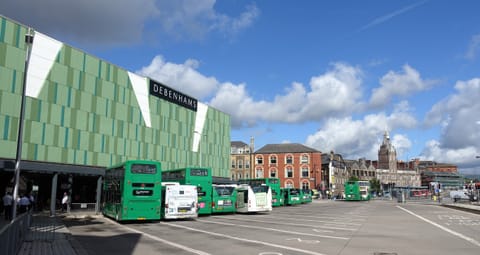
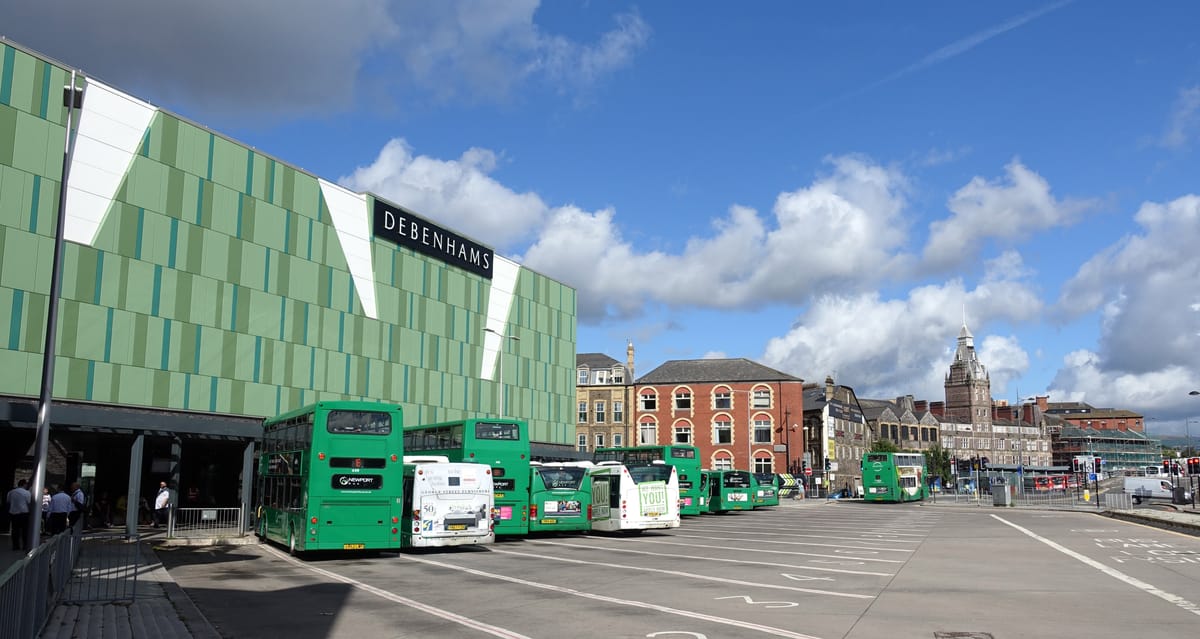
Newport Bus Station: Old Hub and New Gateway for City Travel
On a wet morning in the heart of Newport, the hiss of brakes and the shuffle of commuters tell you the city is awake. Few places capture the daily rhythm of South Wales quite like its bus station, where shoppers, students, shift workers and visitors have crossed paths for generations.
Why a Bus Station Counts as a Landmark
Bus stations rarely appear on postcards, yet they shape how a place works. In Newport, the bus station has been a meeting point, a waiting room and a gateway to the valleys, the coast and the neighbourhoods beyond the centre. Most people in the city have a story that involves it, whether a first journey to school, a Saturday trip to town or a late ride home.
That ordinary importance is why it earns a place among the city's landmarks. It is part of the working fabric of Newport, and its changing form mirrors the changing shape of the centre itself.
Public Transport in Newport: A Short Background
Newport has a long tradition of municipal transport. The town ran its own tram services in the early twentieth century before buses took over as the main way to move around the area. The council-owned operator, Newport Transport, became a familiar name on local routes and remains closely associated with the city. Other operators have also served Newport and the wider region, linking it with Cardiff, Cwmbran, Caerphilly, Bristol and beyond.
Bus stations grew out of this development. As routes multiplied, it made sense to gather services in one central place, so passengers could change between routes easily and the streets were not clogged with buses waiting at the kerb.
The Old Bus Station
A Busy Concourse on the Edge of the Retail Core
The previous bus station was a functional, post-war style facility close to the retail centre, built in an era when practicality mattered more than polish. It handled large numbers of services and was, for many years, the main point where local routes met.
Like many bus stations of its generation, it had its share of criticism. Passengers often described it as dated, draughty and tired, and as the city looked to improve its centre, its location and condition came under scrutiny. Even so, it was a place of real daily importance, and many residents recall it with a mixture of affection and exasperation.
Making Way for Change
Newport's centre has been through a long period of regeneration, with work on the riverfront, new bridges, offices, housing and a modern retail and leisure quarter at Friars Walk. Redevelopment on this scale meant rethinking land that had been used for transport, and the old bus station was part of that rethink. Its closure and replacement were part of a wider effort to make the heart of the city more attractive and better connected.
The Present Bus Station
The current bus station is a more modern interchange, designed with passenger comfort and ease of use in mind. It sits in the central area, within walking distance of the main shopping streets, Friars Walk and the railway station, which makes changing between bus and train far more straightforward than it once was.
Modern facilities of this kind generally offer covered waiting areas, clear information displays and organised bays, and Newport's reflects that approach. For visitors arriving in the city, it is a far friendlier first impression than the tired concourse it replaced.
What Passengers Can Expect
- Local routes linking the city centre with suburbs such as Maindee, Bassaleg, Caerleon and Malpas.
- Regional services connecting Newport with nearby towns and cities across South Wales.
- Connections to the railway station and the main shopping and leisure areas on foot.
Routes and timetables change regularly, so it is always worth checking with the operators or the local council before you travel.
A Bus Station in a Changing City
Newport has spent the past couple of decades reshaping its centre, from the waterfront along the River Usk to the streets around Kingsway and Queensway. A good bus station supports all of that. It brings people into the centre to shop, eat, watch sport and visit cultural venues, and it helps those without a car to take part fully in city life.
It also fits the wider push towards sustainable travel. Reliable buses reduce traffic and make the centre more pleasant to walk through, which matters in a city