Newport Civic Centre: A Landmark of Civic Pride Above the City
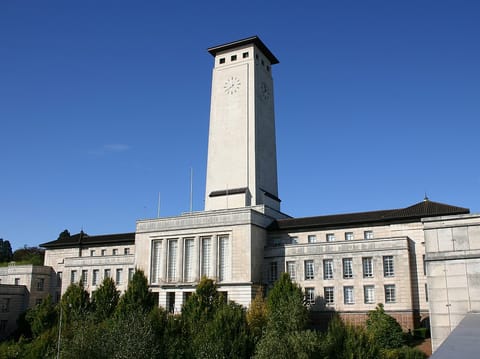
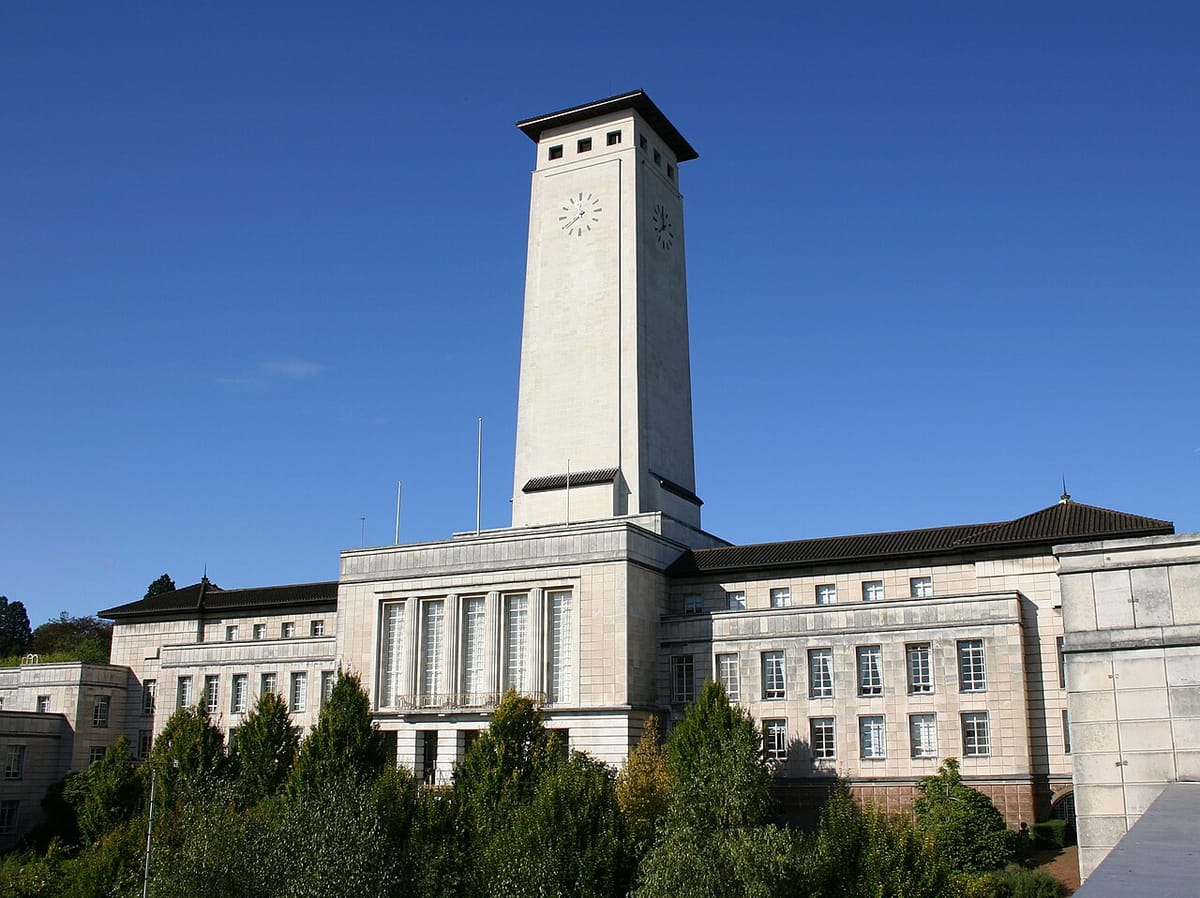
Look up from almost anywhere in the city centre and a pale stone clock tower stands against the skyline, watching over the rooftops and the River Usk below. Newport Civic Centre on Godfrey Road has been a fixture of local life for generations, and it remains one of the best-known Newport landmarks. It is also the working home of local government.
From Commercial Street to Godfrey Road
Before the Civic Centre, the town's business was conducted in Commercial Street. The first town hall there, in a classical style, opened on 31 January 1843. As Newport grew, it proved too small. A second, grander Renaissance-style building by Thomas Meakin Lockwood replaced it and was completed in 1885.
By the 1930s, civic leaders again felt that the building could not keep up with the needs of a busy, expanding borough. They chose a fresh site on the hillside at Godfrey Road, where a property known as St Mary's Lodge had stood. The plan was ambitious and forward-looking. It reflected the confidence of a town that had grown rich on coal, iron and the docks.
A Competition, a Royal First Sod and a War
The design was chosen through a national competition. The winner was Thomas Cecil Howitt, a Nottingham architect best known for Nottingham's Council House and for his Art Deco public buildings. On 14 July 1937 King George VI, accompanied by Queen Elizabeth, cut the first sod, a moment that gave the project real national attention.
The outbreak of the Second World War interrupted the work. The main building opened to the public in 1940, but the tower had to wait. Construction was suspended until the early 1960s. In September 1963 the Corporation voted to finish it at a cost of £126,900. The sum drew some sharp comments in the chamber at the time, which suggests that civic pride has always been tempered by a healthy local scepticism.
Civic Architecture in Portland Stone
As a piece of civic architecture, the Civic Centre is a distinctive blend. It is usually described as Art Deco, with a measured, classical sense of order and some Italianate touches. The building is clad in Portland stone, the same pale limestone used for many of Britain's most important public buildings. The tower reaches about 55 metres.
Not every critic has been dazzled. One respected architectural guide to Wales judged that it commands the town effectively from a distance, yet found its detailing rather conventional up close. Even so, the sheer presence of the building is hard to ignore, and it is now widely valued as a rare, large-scale example of its style in Wales. It was designated Grade II* listed on 14 September 1999, a status that places it among the more significant protected buildings in the country.
The Feibusch Murals
Inside the base of the tower, the Civic Centre has a real treasure. A set of 12 large murals by the German-born artist Hans Feibusch fills the central hall with colour. They were commissioned around 1960 and finished in 1964, and they tell the story of Newport in pictures.
What the murals show
The sequence begins in Celtic times and moves through the centuries to the industrial age, finishing with the building of George Street Bridge over the River Usk. For anyone interested in Newport history, it is a vivid introduction. Each panel is on a monumental scale, with rich, warm colours and strong figures. Feibusch was a notable muralist who found a home in Britain and painted for churches and public buildings. Newport's collection is one of the finest in Wales.
Newport Council has marked the anniversary of the murals in recent years, and they are regularly singled out as one of the city's great artistic assets.
A Working Heart for the City
The Civic Centre is far more than a monument. It is the headquarters of Newport City Council, and the Mayor's office is based here. It sits alongside the neighbouring court complex, so the area around Godfrey Road is also a hub of justice and administration. Residents come here for council business, for civic ceremonies and for the democratic life of the city.
That working role carries challenges. A mid-century building of this size and listed status is costly to maintain, and any work needs close cooperation with Cadw, the Welsh Government's historic environment service. In recent years the condition of the clock tower has drawn concern from residents who treasure it, and the Council has said its priority is to carry out essential repairs so the building can keep serving the public. Questions about future office needs have been aired too, but any change would have to respect the protected fabric and the murals.
Why It Matters Today
Newport has reinvented itself many times, from market town to bustling port, to steel and to modern city. The Civic Centre stands for the belief, running through all those chapters, that a community deserves a fine public building at its heart. Its tower is a handy point of orientation, its murals teach local history to anyone who walks in, and its stone walls link the 1930s to the present day.
For visitors exploring the city's heritage, it is well worth a look, whether you admire it from a distance on the hillside or step inside to see the murals. For people who live here, it is simply part of the picture of home, a proud and enduring symbol of Newport.