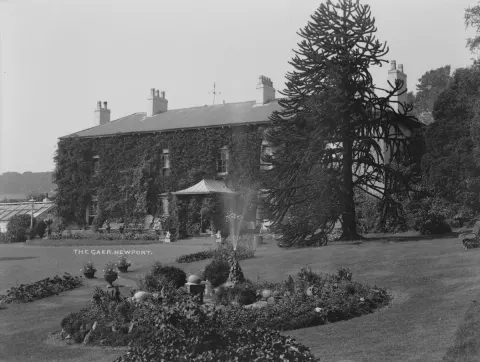
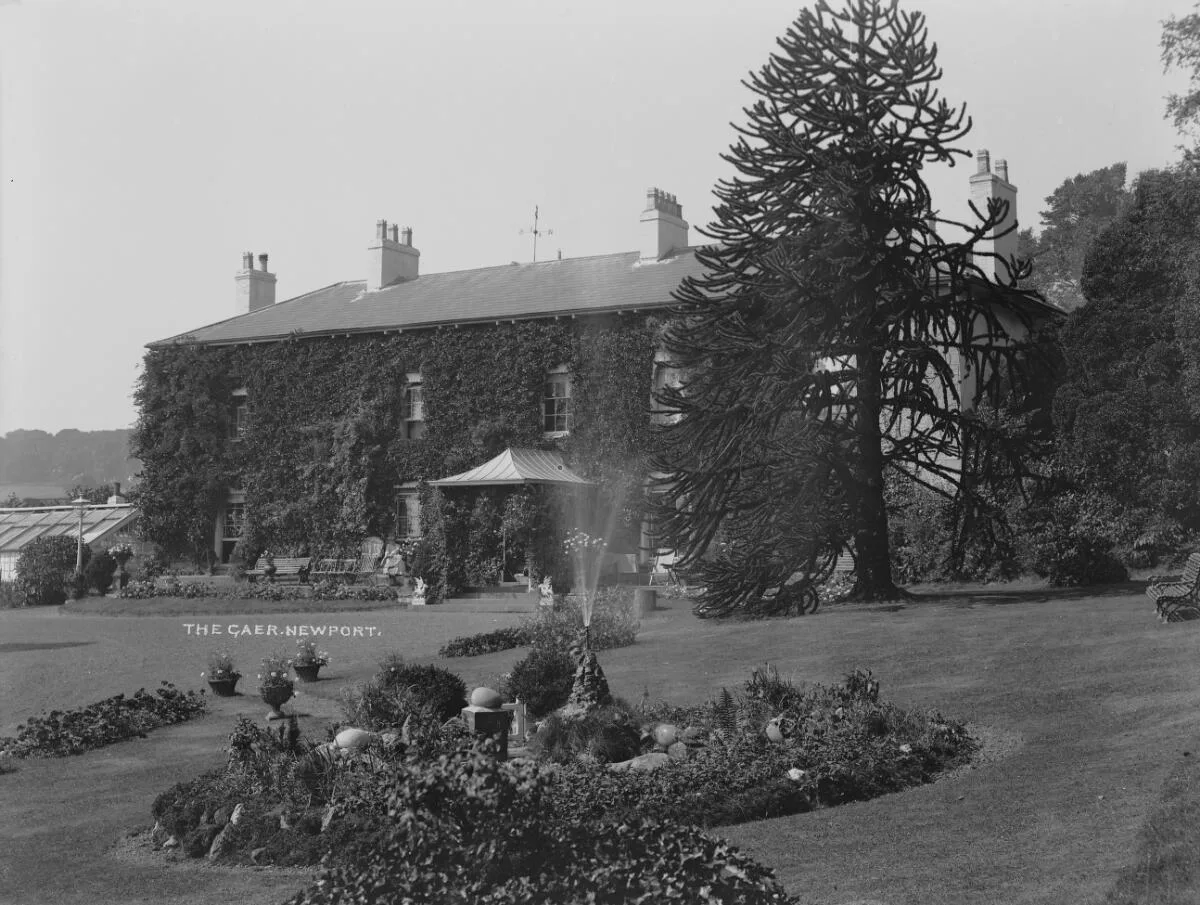
The Gaer House, Newport: A Hilltop Name with Ancient Roots
Look west from Newport city centre and the land rises towards a green, wooded ridge above the River Usk. This is the Gaer, one of the city's most historically loaded place names, and it gives The Gaer House its identity. Understanding the house starts with understanding the hill it is named after.
Where the Gaer Sits in Newport
The Gaer is a residential district on high ground to the west of the city centre. It lies close to well-known neighbours such as Stow Hill, Belle Vue Park and the Brynglas area, and its position on the slope means many streets look back over the city and the river valley.
That elevation has shaped the area's story. High ground has always been valued for defence, for views and for healthier air, which explains why hills like this attracted both early settlers and, later, comfortable villas and family homes.
What the Name Means
A Welsh word for a fort
"Gaer" is the soft-mutated form of the Welsh word caer, meaning fort or fortified place. Wales is full of names that begin Caer- or contain -gaer, and each one hints at an enclosure, stronghold or military site somewhere in the surrounding landscape.
In Newport's case, the name is usually linked to an ancient earthwork enclosure on the hill, traditionally regarded as a hillfort. Such sites are typically associated with the Iron Age, though the details of any particular enclosure are a matter for archaeologists rather than guesswork.
A neighbour to Roman Caerleon
Newport is a city of fortified places. A few miles up the Usk stands Caerleon, where the Romans built the legionary fortress of Isca. The Gaer's name belongs to the same family of Welsh "fort" words, a reminder that this stretch of the river valley has been contested, defended and settled for a very long time.
The Gaer House: What We Can Say
A house that takes its name from a district or hill usually tells us something simple: it was built on, or looked towards, that ground, and its owners or builders wanted to anchor it to a place with history. The Gaer House fits that pattern.
Reliable published detail on the building itself is limited. Its construction date, architect, early occupants and later uses are not set out here, because they should not be guessed at. What can be said with confidence is that the name connects it to one of Newport's oldest recognised landscapes.
- Name: taken from the Gaer, the Welsh word for a fort.
- Setting: the elevated western side of Newport above the Usk.
- Importance: a local landmark name that links modern Newport to its ancient past.
From Ancient Hill to Modern Suburb
Like much of Newport, the western hillsides changed dramatically as the town grew. The nineteenth century brought the docks, railways and rapid population growth, and prosperous families moved to the slopes to enjoy open space away from the busy waterfront.
In the twentieth century, new housing spread across more of the hill, turning farmland and large gardens into the streets that make up the district today. Houses that carry the Gaer name stand as markers of this transformation, sitting between the old landscape of earthworks and fields and the modern residential city.
How to Trace the History of a House
If you want the full biography of The Gaer House, a few resources are well worth a visit. Local history research is often the most rewarding when it is done in person.
- Gwent Archives hold deeds, estate papers, maps and council records for the old county, and are the best starting point for ownership and building dates.
- Newport Central Library has a local studies collection with street directories, newspapers and photographs.
- Newport Museum and Art Gallery can often point researchers towards collections about the city's neighbourhoods and people.
- Coflein, the online record of Wales's historic environment, lists archa