Footbridge Convoy: The 44m Lorry That Crossed Newport in 2006
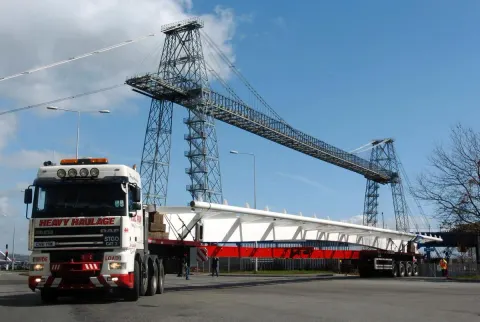
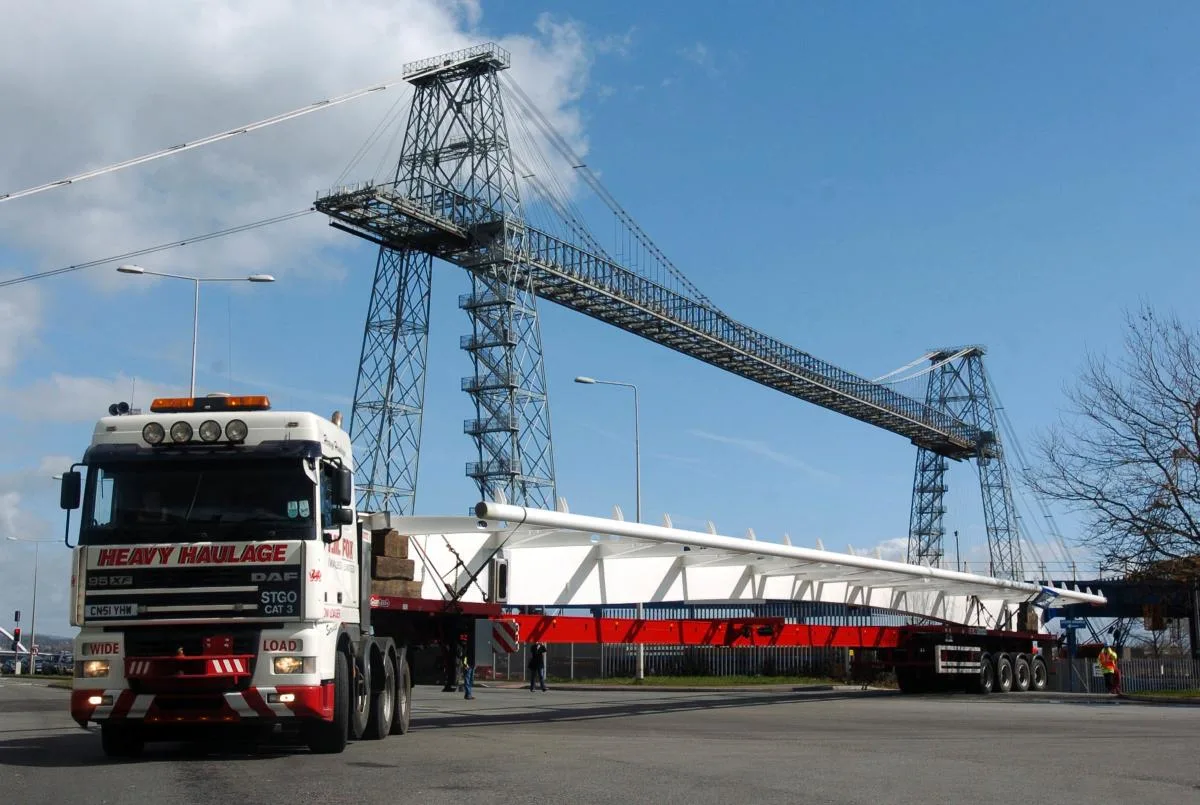
On the banks of the River Usk, Newport was changing shape in the spring of 2006. Cranes, steelwork and diggers were part of everyday life, and one March day brought an unusually long visitor to the roads: a lorry about 44 metres (144ft) from end to end, with a bridge section on its back.
A Lorry the Length of Four
The vehicle was hired specially by the engineers building a new £5 million footbridge over the Usk. Its job was to move the middle span, a 60-tonne section, from one part of Newport to another. Ordinary lorries of the time measured around 12 metres, so this one was roughly four times the usual length.
The load was too large for a normal journey. The lorry took up two lanes of the M4, and part of the motorway slowed to a standstill while it passed. Police escorted it, and the trip took about an hour.
What Was Being Carried
The cargo was the central section of a crossing designed for pedestrians and cyclists. Once in place, it would link the Maindee side of the river with Newport city centre. For anyone on foot or two wheels, that promised a more direct route over the water than before.
The footbridge was designed on a grand scale. Reports at the time described the following:
| Feature | Reported figure |
|---|---|
| Length | 145 metres |
| Height | 67 metres |
| Forward mast | 80 metres |
| Rear mast | 70 metres |
| Steel used | 850 tonnes |
| Planned lifting date | May 2006 |
Four crane-like masts, arranged in two pairs, were designed to support the structure from the west bank. The bridge was expected to reach about the same height as the Newport Transporter Bridge, the city's famous iron landmark a little further downriver. The figures above are those published in 2006, and the finished structure may differ in detail.
Part of a Bigger Plan
The footbridge was not a stand-alone project. It belonged to the long-term regeneration of Newport, overseen by the urban regeneration company Newport Unlimited. The funding came from Newport Council and the Welsh Development Agency (WDA).
Newport Unlimited's wider scheme was substantial. It aimed to deliver more than 60 projects across 15 priority areas. The hope was to draw in over £600 million of private investment and create around 4,000 new jobs. In that context, a landmark bridge on the Usk was both a practical link and a visible sign that the city was investing in its future.
Why the Height Mattered
The chief executive of Newport Unlimited at the time, John Burrows, said the finished bridge would stand very high and rise above the city once lifted into position. That was the point of the design. A slender, tall structure with masts would be seen from across the riverside and would give the waterfront a new focal point alongside older landmarks.
The Wider Setting
The Usk has always shaped Newport. The river brought trade, shipbuilding and industry, and it still defines the city's skyline. Nearby bridges, from the Transporter to the railway and road crossings, tell the story of how Newport has repeatedly reinvented its connections across the water.
Plans reported alongside the lorry story show how much was happening at once. A city-centre college campus had won backing, a 30-year vision for the city had been unveiled, a shopping centre revamp had been revealed, and a £150 million docks regeneration was under discussion. The footbridge was one visible piece of that broader picture.
Why the Journey Is Remembered
Moving oversized loads is a common, if dramatic, part of big construction jobs. What made this journey stand out was its scale: a lorry far longer than its neighbours, a police escort, and a section of bridge heading across town. For many people in Newport it was an early sign that the riverside project was becoming real.
It also reflected the practical work behind civic landmarks. Before any ribbon is cut, engineers have to plan routes, hire specialist transport and coordinate the emergency services so that steel built in one place can be put together in another.
Looking Back
The convoy of March 2006 was brief, lasting about an hour, but it captured a moment of ambition in Newport. The finished crossing, now part of the city's riverside scene, links Maindee and the city centre for walkers and cyclists. It remains a reminder that Newport's story is told in steel, stone and water, and that the city has always been willing to build boldly over the Usk.